Library
What Is Vietnamese Mother-of-Pearl Inlay (Khảm Trai)?
Vietnamese mother-of-pearl inlay, or khảm trai, sets pieces of nacre—the iridescent inner layer of certain shells—into a surface. In the woodwork of Chuôn Ngọ near Hanoi, shell forms the design itself. A pearl-like print creates a similar look with ink.
By AE&Adamas Store · Published
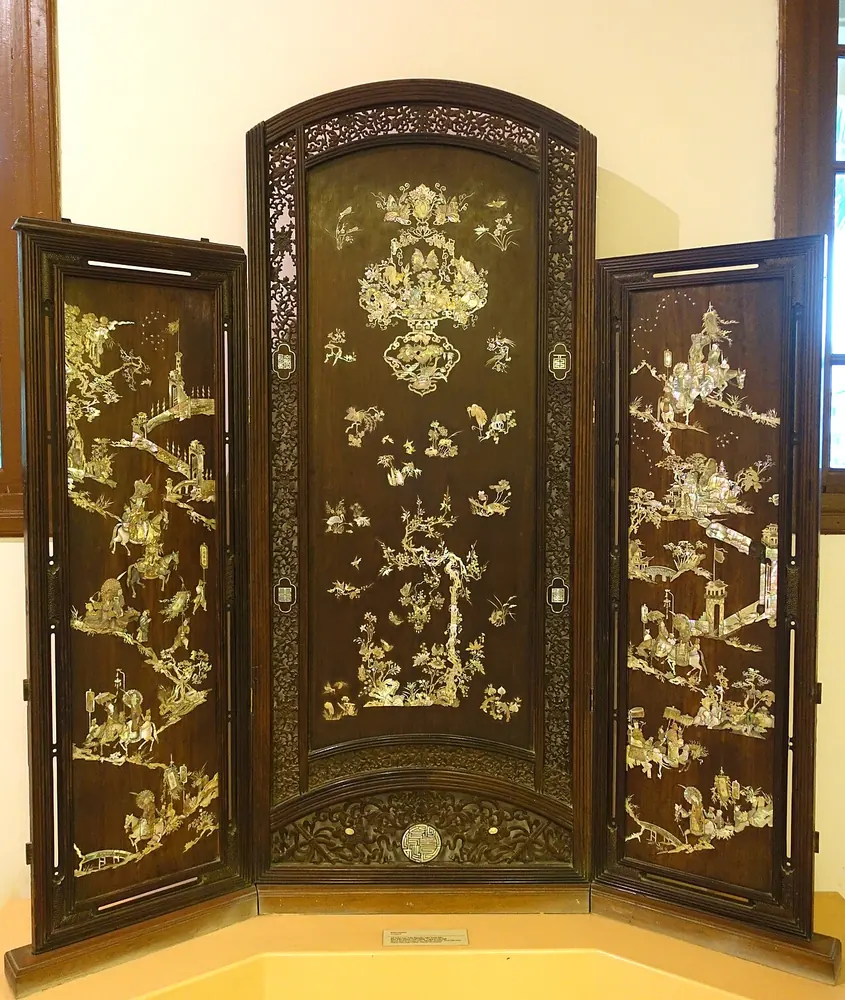
How artisans inlay mother-of-pearl in wood
In Chuôn Ngọ, a craft village near Hanoi, the design starts with a drawing. Artisan Phạm Văn Bắc describes the steps in VietNamNet’s account of the village: saw the shell into shapes, carve matching recesses in the wood, fit the pieces, then polish the surface. Each bright leaf or petal is a separate piece of shell set into the wood.
Nacre can shift in color or brightness as the light or viewing angle changes. A catalog photo freezes that effect at one angle. A short video under moving light can show how the surface behaves, but ask for a material description as well.
Is mother-of-pearl the same as eggshell in lacquer?
Mother-of-pearl comes from the inner layer of certain shells. Eggshell and nacre are different materials, and either can form part of a design. A work described only as lacquer does not necessarily use either.
For a documented example, National Gallery Singapore describes how Nguyễn Gia Trí used eggshell in Les Fées to depict effects such as light on a face. The gallery also explains how artists sand back layers of lacquer to reveal colors and inlaid material. See What Is Vietnamese Lacquer Painting? for the painting process.


What should you check before buying?
- “Wood with mother-of-pearl inlay.” Ask what the decorative pieces are made of and how they were set into the wood. Request a close-up of one motif and a photo of the entire object.
- “Lacquer with eggshell.” Check whether the listing names eggshell and lacquer as materials used in the piece. Pale flecks by themselves do not tell you what is in the surface.
- “Pearl effect,” “inlay-inspired” or “lacquer style.” Check what will arrive: a print on paper, a painted object or something else. Style words describe appearance; the material line tells you what you are buying.
For a piece sold as antique or attributed to a particular workshop, ask which records support its date and origin. A close-up can show details; it cannot establish the history of an object on its own.
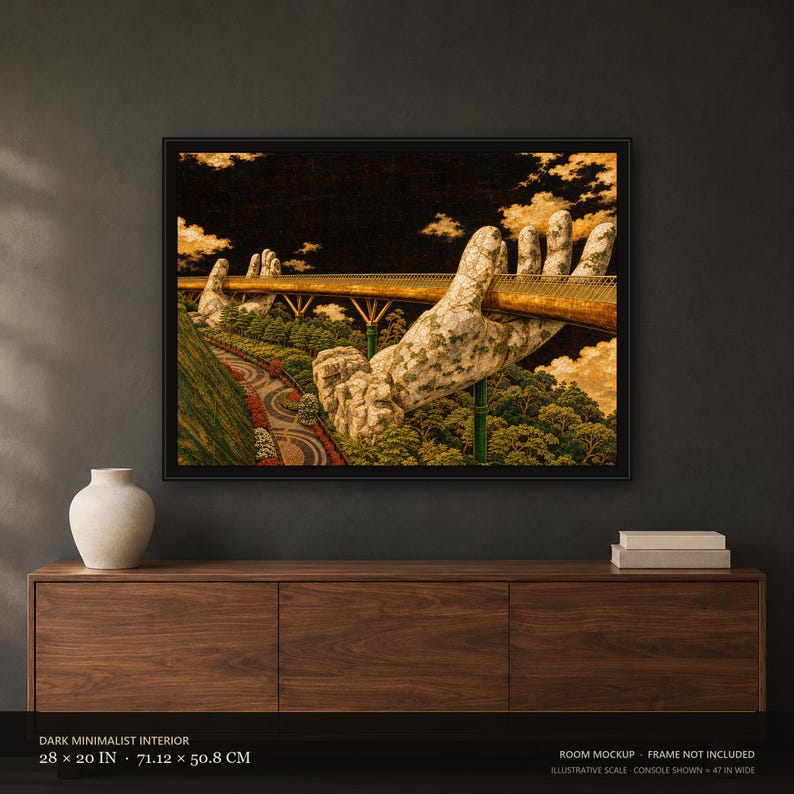
What is the pearl-like effect on AE&Adamas prints?
Golden Bridge uses pale flecks and warm gold-colored marks against a dark ground. Those details are printed on matte paper. The print contains no shell, eggshell, metal leaf or lacquer. The frame in the listing mockup is not included.
The Vietnamese landscape print collection lets you compare three scenes. Each is an unframed 28 × 20-inch print on 189 gsm matte paper. If you are still comparing materials, use our guide to lacquer paintings and lacquer-inspired prints to read the rest of the listing.
Sources
- Chuon Ngo nacre inlays: The millennial craft village in Hanoi’s outskirt — VietNamNet
- Vietnamese Lacquer Painting: Between Materiality and History — National Gallery Singapore
These sources give cultural and geographic context. They do not describe how AE&Adamas products are made; product facts come from the dated Etsy catalog check.